When people hear about major earthquakes, many of them originate from the Pacific Ring of Fire. This vast geological region is responsible for most of the world’s seismic activity and remains one of the most closely monitored areas on Earth.
Understanding why ring of fire earthquakes occur can help explain how our planet works and why certain countries face greater geological risks than others.
The Science Behind Earthquakes
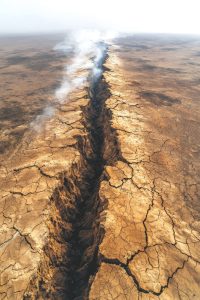
Earthquakes occur when energy stored within the Earth’s crust is suddenly released. This energy travels through the ground as seismic waves, causing the shaking that people experience during an earthquake.
The Pacific Ring of Fire is particularly active because it contains numerous tectonic plate boundaries. These boundaries are areas where plates collide, separate, or slide past one another.
The ring of fire Pacific Ocean region includes interactions between the Pacific Plate and several surrounding plates. These movements generate enormous pressure that eventually results in earthquakes.
Why the Pacific Ring of Fire Is Unique
One of the most important ring of fire facts is that the region accounts for approximately 90 per cent of global earthquake activity.
This remarkable statistic is due to the large number of active fault systems and subduction zones found throughout the Pacific basin. Subduction zones are particularly significant because they can produce some of the strongest earthquakes ever recorded.
The Pacific belt ring of fire contains numerous fault lines capable of generating earthquakes with magnitudes exceeding 8.0.
Countries Most Affected
Many Pacific Ring of Fire countries experience frequent earthquakes. Some of the most affected nations include Japan, Indonesia, the Philippines, Chile, Mexico, and New Zealand.
Japan is especially well known for its earthquake preparedness. The country has invested heavily in engineering solutions, warning systems, and public education campaigns designed to minimise earthquake-related risks.
Indonesia also faces significant challenges due to its location along multiple tectonic boundaries. Frequent seismic activity is a part of daily life for many communities throughout the country.
The Relationship Between Earthquakes and Tsunamis
One of the most dangerous consequences of ring of fire earthquakes is the potential for tsunamis.
When powerful earthquakes occur beneath the ocean floor, they can displace vast amounts of water. This displacement creates tsunami waves that can travel thousands of kilometres across the Pacific Ocean.
The ring of fire Pacific Ocean region has produced some of the most destructive tsunamis in recorded history. Coastal communities throughout the Pacific therefore rely on sophisticated monitoring systems and warning networks.
Advances in Earthquake Monitoring
Modern technology has significantly improved scientists’ ability to monitor seismic activity.
Networks of sensors continuously track movements within the Earth’s crust. Satellites and GPS systems also provide valuable data regarding tectonic plate motion.
Although precise earthquake prediction remains impossible, researchers can identify areas of increased risk and provide early warnings once seismic activity begins.
These systems have proven invaluable in reducing casualties and improving emergency response efforts.
Why This Matters
Ring of fire earthquakes are a natural consequence of the dynamic forces shaping our planet. While they present significant challenges for affected communities, ongoing scientific research continues to improve our understanding of these powerful events.
The Pacific Ring of Fire remains one of Earth’s most active geological regions, and studying it provides valuable insights into the forces that continue to shape our world.